I built a scraper for my own job search, then rebuilt it three times until a stranger could run it safely and cheaply.
What I built, alone
- For meA local scraper and dashboard
- For friendsA hosted backend and an agent
- For anyoneJobsift, on the free Cloudflare plan
- AI layerScoring and a skill plan, in the browser
- ShippingDesign system, security review, tests
Why it exists
The problem
Reading every post on four job boards against my CV took longer than applying.
Jobsift
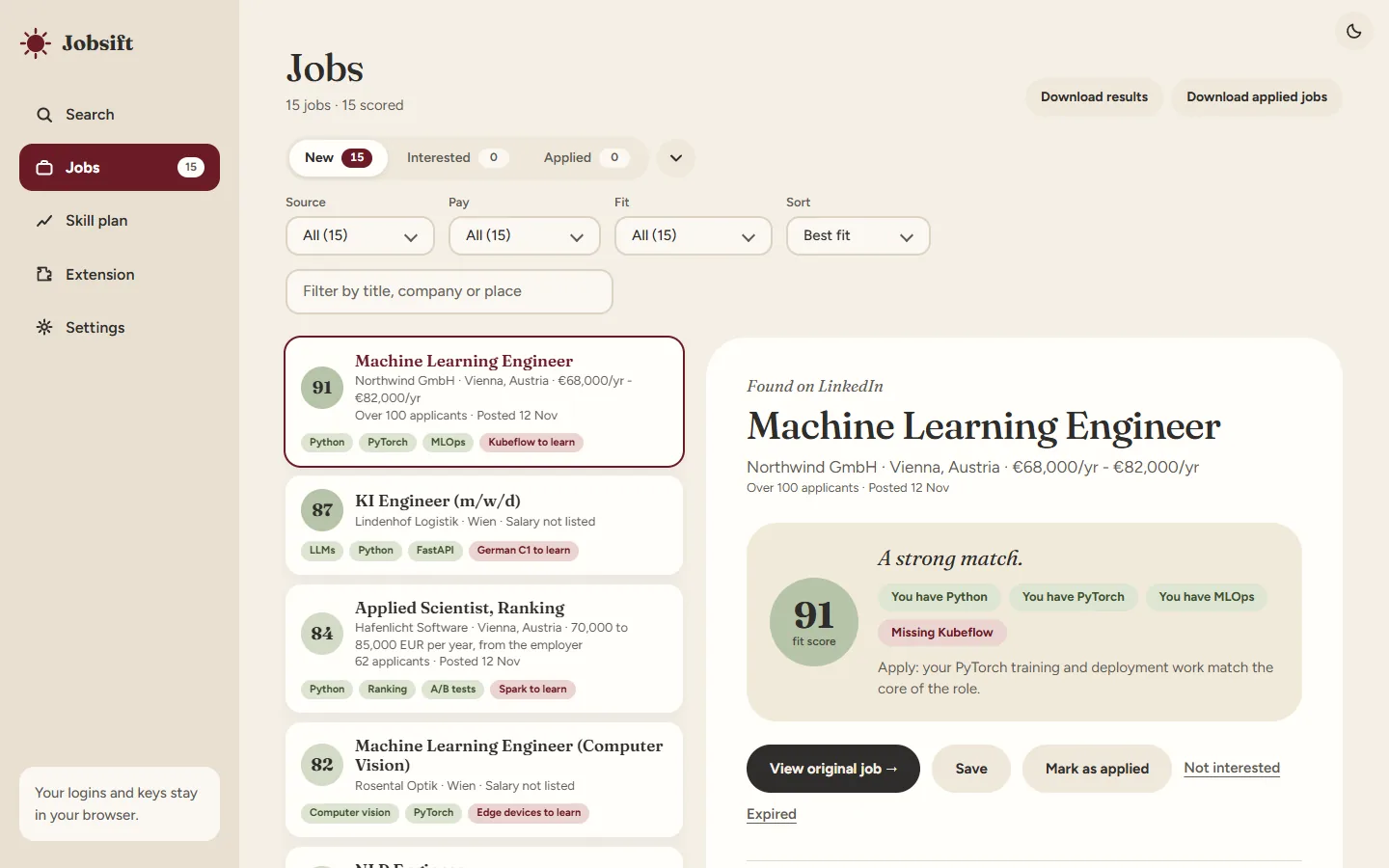
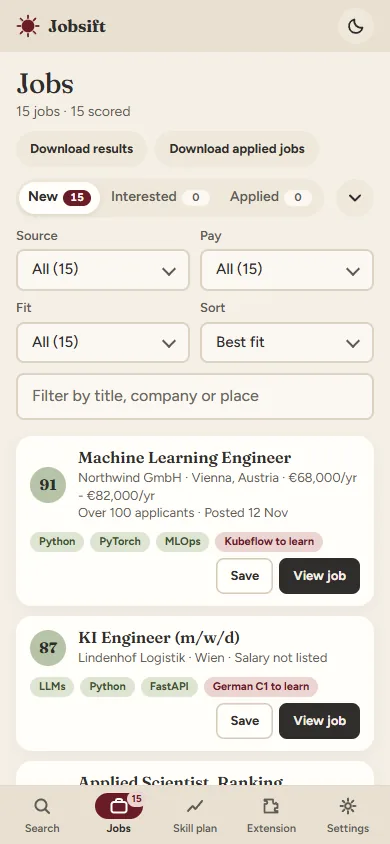
Reads the boards for you and ranks every job by how well it fits.
I used it for my whole search. Then friends asked for it.
What it does
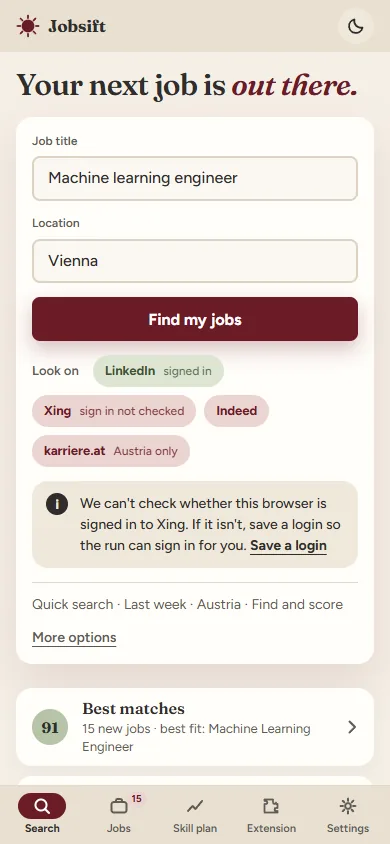
- SearchFour job boards, read from your own browser.
- ScoreEvery job against your resume, with your AI key.
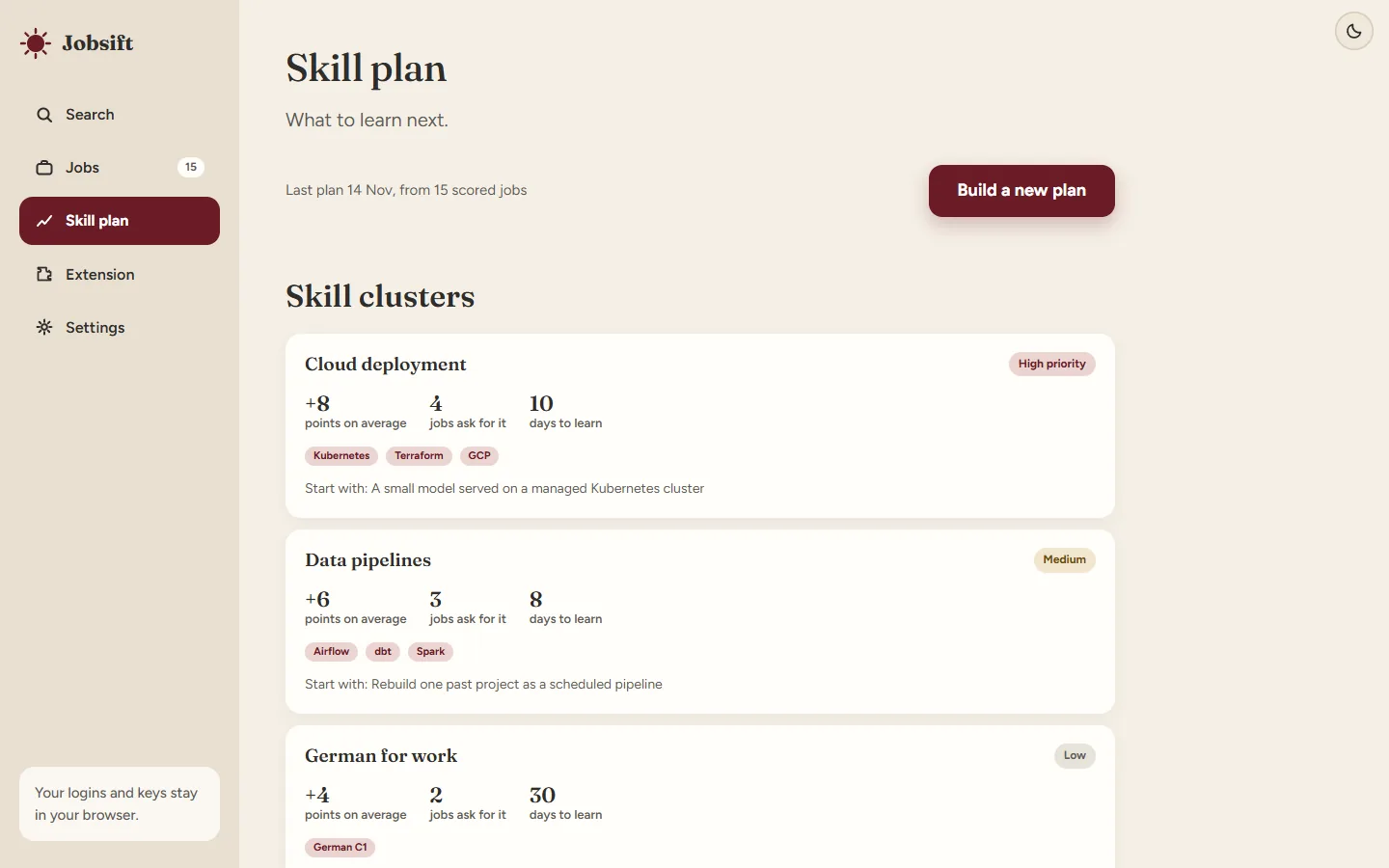
- PlanThe skills that would raise your fit the most.
- TrackStages, notes and follow ups after you apply.
Not just another scraper
The boards already know a lot about you. Jobsift uses that, then cuts through it.
- Signed in as youEach board is searched in your own browser, with your own session.
- Ranked for youOn LinkedIn the list arrives in the order its own recommendation engine picks for your account.
- Scored by JobsiftThen every job is scored against your resume, so the noise falls away and the real fits rise.
Three versions to get here
March to August
For me
Flask, Playwright, JSON files
One process on my laptop. One user by design.
November
For friends
FastAPI and an agent per person
A server to pay for, holding their keys.
November
For anyone
Cloudflare Worker and a Chrome extension
Free to host, no keys on the server. This is Jobsift.
Three backends were too much for one person, so I froze the Python side and kept the Worker and the extension.
What I decided
- I scrape in your browser, not on a server.Job boards block server addresses, and I never want your job site password.
- I never hold your AI key.Friends should not have to trust me with it, even encrypted.
- I host it for free.I cannot pay per user, so the design has to fit a free plan.
- I keep one copy of each job for everyone.People search the same jobs. Only the scores are per account.
- I walk strangers through setup.I knew every rough edge. They do not.
Scoring people can trust
- Cost firstThe Score button shows what a run will cost before anything is sent.
- Your model, your keySix providers, called from your browser. Haiku by default, because it is enough to rank a job.
- Honest low scoresBelow 55 a job says it is probably not a fit. No made up reply chances.
- Spend where it paysLinkedIn pay is read only for jobs that score 40 or more.
A look of its own
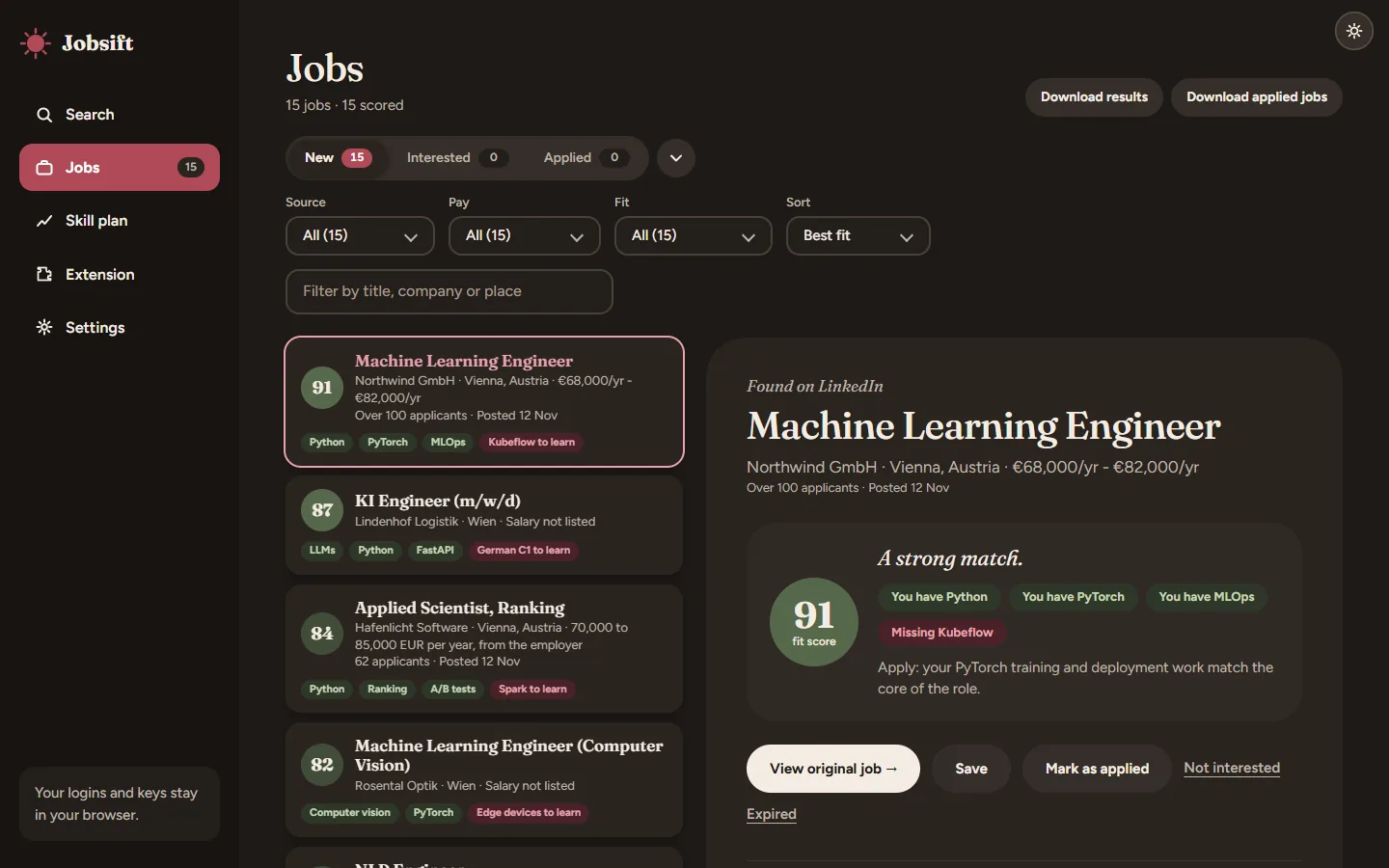
I tried 28 directions, then built one into a design system: burgundy on beige, with a list and a detail panel.

Who holds what
Built to cost nothing
- 0AI calls from the serverScoring runs in the extension on your key.
- 0resume files storedResumes are read in the browser; only text is sent.
- 1copy of each jobStorage grows with jobs, not with people.
Hardened for strangers
I reviewed Jobsift the way a stranger would meet it, and closed every gap I found.
- Strict content security policy
- Integrity checked libraries
- Sessions end on a password change
- Agent tokens stored only as hashes
- Exports that cannot carry formulas
- Throttled sign up and sign in
- Passwords hashed 100,000 times
- 110tests: 59 Worker and 51 Python, plus a full search in Chromium as the release gate